

 Design
  Residential
  Commercial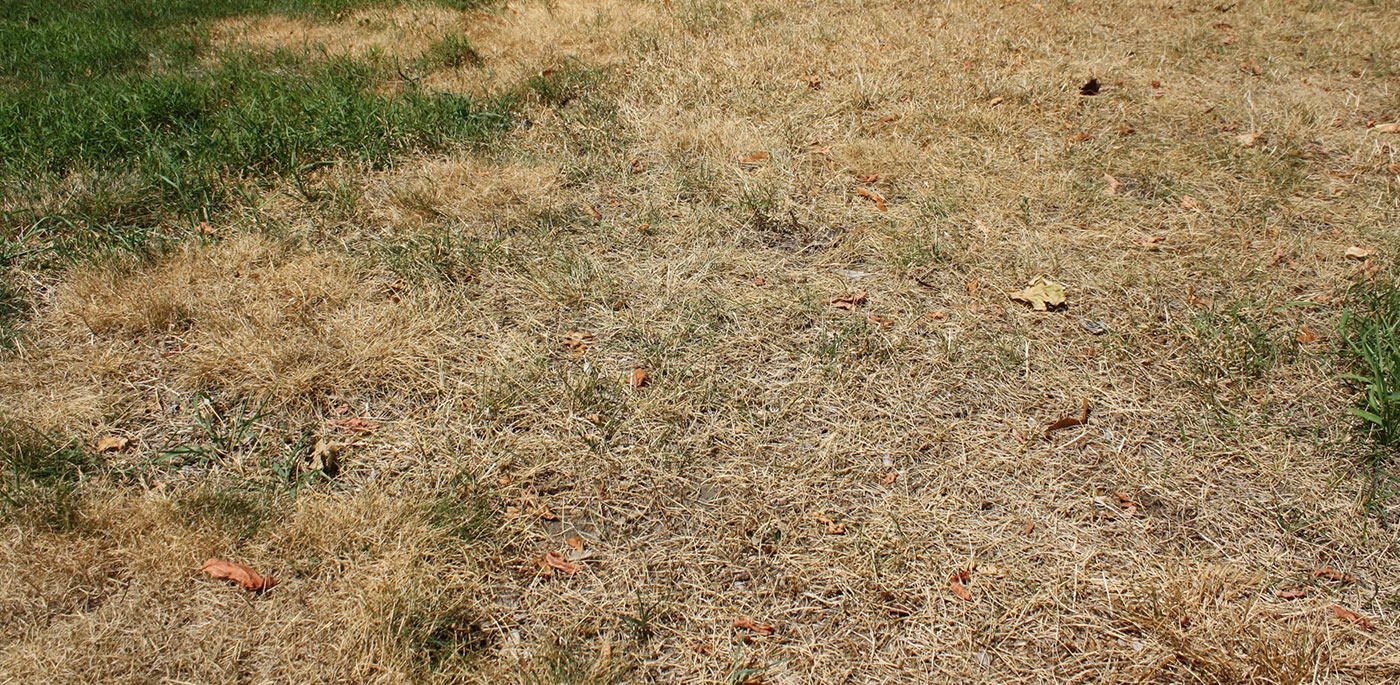


There comes a point every year when it feels like the sun has a personal grudge against your lawn. Rain takes a break, temperatures climb, and even well-cared for yards start looking tired.
If you are staring at straw-colored patches and worrying that your lawn might be dead, you are not alone. The good news is that the problem might be drought stress and not permanent loss. The key is knowing what you are seeing and how to respond to it so the lawn bounces back when the weather eases up.
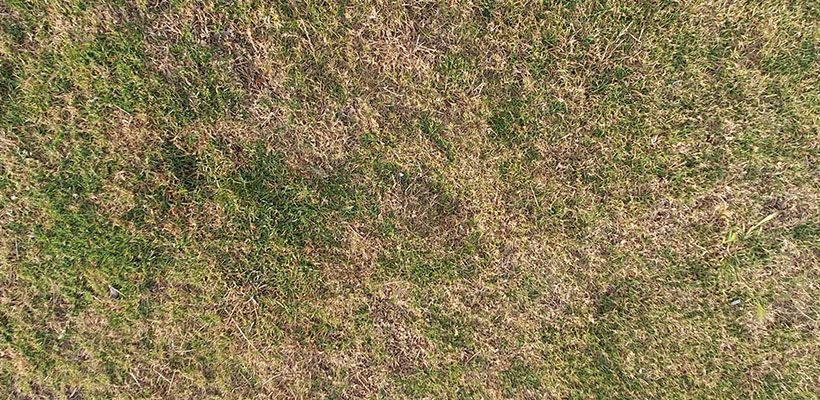
What drought stress looks like
Cool season grass does not love heat. The grass can tolerate it, but it prefers cooler weather. The instant the temperature rises and rain becomes scarce, the grass responds by growing at a snail's pace in order to protect itself.
Common signs of drought stress:
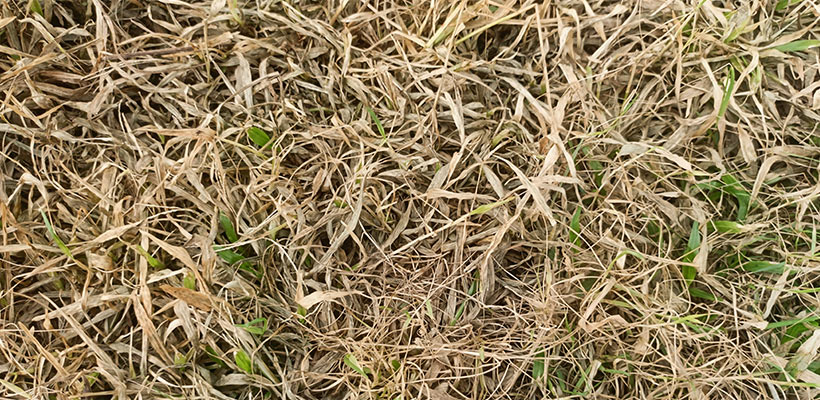
- Grass turns bluish green, then turns brown or tan
- Grass fails to spring back from foot traffic
- Areas on slopes or near pavement begin to discolor
- Patches become dry and crispy when stepped on
You may also notice that your lawn doesn't grow as quickly in the summer as it does in the spring when there is typically more rain. You cut back on mowing, but that doesn't seem to improve the color and health of your lawn. The grass is not necessarily dead; it's pausing to conserve energy. In other words, it's going into survival mode.
Drought stress or something else?
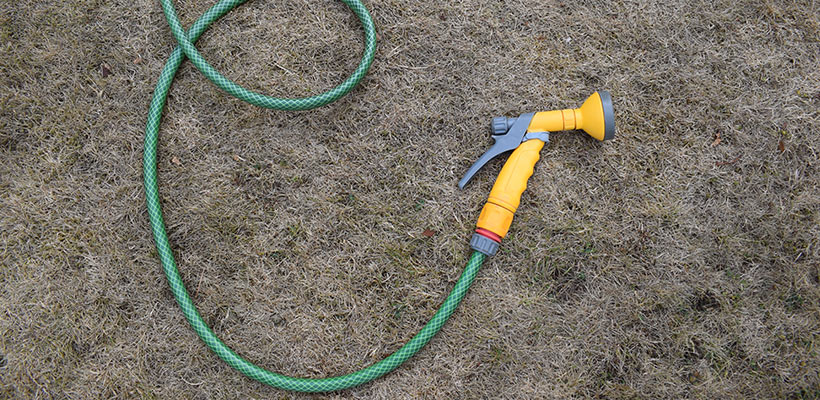
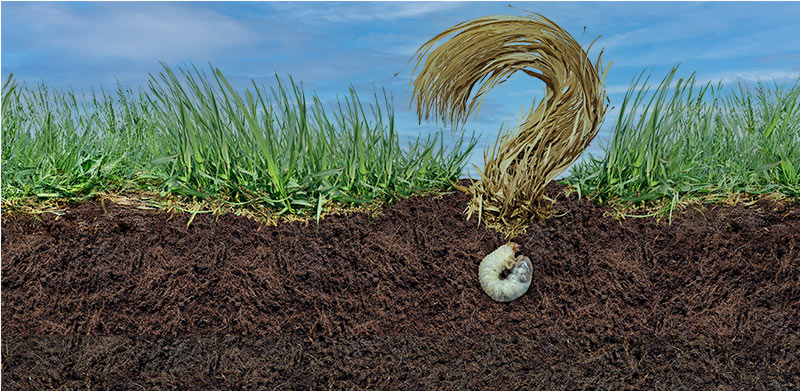
Not every brown patch is caused by drought stress. You may be dealing with something else such as grubs, disease, or drainage problems. Signs of these include the following:
- The turf peels up easily, like carpet (grubs)
- The blades of grass feel slimy (disease)
- An area stays wet during dry weather (poor drainage)
With drought stress, the pattern is usually broader. High spots, sunny slopes, and areas near sidewalks and driveways often suffer first because they dry out faster.
A simple test: push a screwdriver or soil probe into the ground. If it is very hard to penetrate and the soil is powder dry, drought is almost certainly part of the problem.
How to water during dry spells
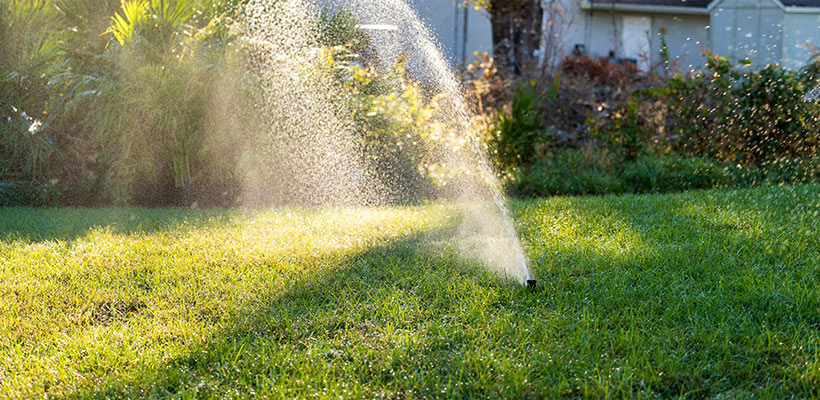
It is better to water some areas properly than to give the entire yard a light sprinkle every day. Shallow watering encourages roots to stay near the surface, which makes drought stress worse over time.
When things dry out, the common reaction is to run sprinklers for short periods. That usually leads to shallow, weak roots and does not help much in real heat.
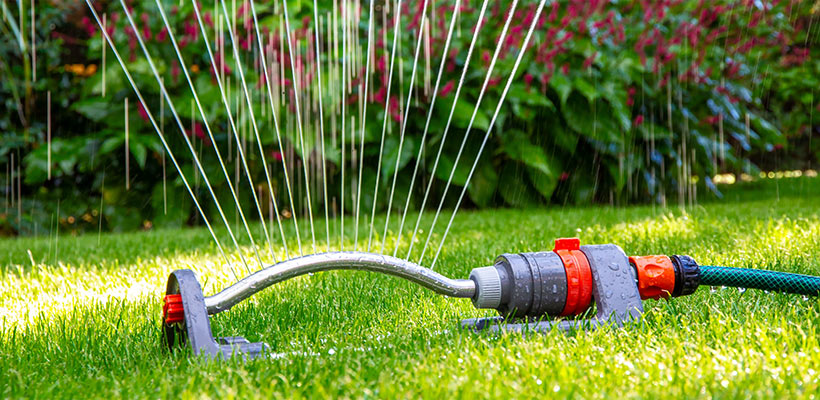
Cool season lawns do best with deep, infrequent watering. In dry spells, stick to the following tips:
- Aim for about 1 to 1.5 inches of water per week
- Water in the early morning so grass can dry during the day
- Run sprinklers long enough so that moisture soaks several inches deep
Where to place your focus if you can't water the entire lawn:
- High visibility areas like the front yard
- Slopes and sunny spots that burn out first
- Newer sections of turf that don't have deep roots yet
It is better to water some areas properly than to give the entire yard a light sprinkle every day. Shallow watering encourages roots to stay near the surface, which makes drought stress worse over time.
Is it ok to let the lawn go dormant?
Sometimes watering restrictions or schedules make it hard to keep everything green. Fortunately, healthy lawns that thrive in cool seasons can often survive during a period of dormancy.
What a dormant lawn usually looks like:
- Shows a tannish color throughout
- Has little growth above ground
- Has living crowns or roots below the surface
What to do if you decide to let your lawn go dormant:
- Stop trying to keep it half green and half asleep
- Occasionally water it heavily (about half an inch every couple weeks)
- Avoid heavy traffic or mowing very short during dormancy
Drought stress is often the start of a story, not the end. The real recovery work happens when the lawn is ready to grow again and you can correct some of the damage.
Once cooler weather and rain return, many dormant lawns wake up and slowly turn green again. It might take several weeks, but it will likely come back if it was healthy to begin with.
Mowing during drought stress
How you mow during hot, dry periods has a big impact on how your lawn handles stress. Be sure to consult the following checklist during a drought spell:
- Raise your mowing height anywhere between 3 and 3.5 inches
- Avoid mowing during the hottest hours of the day (noon to 2 p.m.)
- Keep blades sharp so cuts are clean, not torn
- Never scale back on mowing by cutting the lawn shorter
Taller grass shades the soil, reduces evaporation, and helps roots stay cooler. Scalping stressed lawn exposes crowns and can turn temporary dryness into permanent damage.
If the lawn is barely growing, it is fine to mow less often or even skip a week.
Protecting stressed areas
Keep in mind that lawn stressed from drought becomes more fragile. What could once handle simple traffic can now get damaged easily if proper care is not taken. Treat sun-damaged lawn like you would a sunburn—gingerly and with care.
- Limit heavy foot traffic in the driest areas
- Relocate yard toys occasionally
- Avoid driving or parking vehicles on the lawn
Recovery when weather breaks
One of the most encouraging things about cool season lawns is how often they bounce back when conditions improve. Here's what to do when the temperature eases and the rain returns:
- Keep mowing at a relatively high height; don't lower your mower blades
- Resume a heavy regular watering schedule instead of frequent light watering
- Consider a fall fertilization plan to help the lawn rebuild roots and density
- Overseed thin areas in late summer or early fall while the soil is still warm
Drought stress is often the start of a story, not the end. The real recovery work happens when the lawn is ready to grow again and you can correct some of the damage.
When to call for help
It can be tough to separate actual drought stress from regular dryness. Sometimes, you need a professional to tell the difference.
When to call LawnCare by Walter:
- Brown patches keep expanding even after you adjust watering
- You see signs of insects or disease mixed in with dryness
- Parts of the lawn are not recovering when cooler, wetter weather returns
The LawnCare by Walter team can sort out whether you are looking at drought stress, grubs, disease, or a mix of these issues. We can then recommend a plan that makes sense for your yard and for northern Illinois weather.
Dry spells are tough on lawns, but it doesn't necessarily mean the end of a nice yard. With wise watering, taller mowing, and a plan for recovery, your grass can ride out the drought and come back strong when conditions are right again.
 Max 6 min read